



This study guide was funded by The Pittsburgh Foundation/Howard Heinz Endowment-Multi-Cultural Arts Initiative.
Struggles In Steel was funded for broadcast on public television by the Independent Television Service (ITVS), which was created by Congress to:
“(bring) to local, national and international audiences high-quality, content-rich programs created by a diverse body of independent producers, to take creative risks, explore complex issues, and express points of view seldom seen on commercial or public television. ITVS programming reflects voices and visions of underrepresented communities and addresses the needs of underserved audiences, particularly minorities and children.”
Additional funding was provided by Pennsylvania Humanities Council, The Pittsburgh Foundation/Howard Heinz Endowment – Multi-Cultural Arts Initiative, Falk Medical Foundation, Rockefeller Foundation, American Film Institute, and Pennsylvania Council on the Arts.
To purchase or rent Struggles In Steel for educational use, contact California Newsreel, (877) 811-7495 or [email protected]. If you wish to purchase a copy for personal use, please visit our online store here: Struggles In Steel DVD.
Discussion Questions
- How were the experiences of African-American and white steelworkers different and how were they similar?
- Most of the workers featured in the film came of age during the 1940s and ’50s; many of them served in the armed forces. How do you think they compare with young people entering the work force today? What values do they share, and on what issues do you think they differ?
- In the film, Ray Henderson says: “Our kids don’t know what kind of progress we have made over time. They don’t realize that we had to fight to go work hard.” Would you be willing to do one of the steelworking jobs described in the film? What rights would you be willing to fight for?
- The job reservation system described in the film locked black steelworkers into “Negro jobs” – dirty, dangerous, unskilled, and low-paying until 1974, a decade after passage of the Civil Rights Act. How did the steel companies benefit from this job classification system? Why didn’t the union challenge it? What could you have done if you were a black steelworker in the 1950s and were prohibited from “bidding” on (applying for) a higher skilled job in the mill?
- What do you think the situation of black steelworkers would be today if there never was the 1974 Consent Decree mandating affirmative action? What do you think might happen if affirmative action is abolished? Do you think there are alternative remedies that would not be based on race to address the continuing problem of African-American unemployment? If yes, what might these be?
- Why did the loss of manufacturing jobs so disproportionately hurt African Americans? What kind of job opportunities are there for young people or other unskilled or semi-skilled people in the inner city today? What are the material and emotional effects of under-employment – where lower skills translate into lower wages and loss of benefits?
- In the film, workers talk about the psychological problems that affect workers who have lost their jobs. Work provides the fulfillment of material and emotional needs. What is the psychological effect of unemployment? How does the loss of work translate into increase in suicides, alcoholism, hunger, infant mortality, domestic violence?
- What are the economic and psychological costs when an industry abandons a community?
Media and research techniques
- The making of this film was inspired by a television program on unemployed steelworkers which didn’t mention African-American millworkers. How do you think the media handles the issue of labor and workers in general? How has the media shaped people’s perceptions of organized labor? African-American men? Affirmative action in the workplace?
- Struggles In Steel uses oral history as a research tool. How valid is oral history as a research tool? What are its advantages and disadvantages?
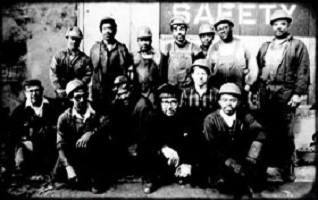
- How effective are the documentary techniques (interviews, clippings, archival footage, stills) used in Struggles In Steel? How well do the images and music work to make the steelworker’s stories concrete to the viewer?
- How are the documentary techniques used in Struggles In Steel different from those used in shows such as 60 Minutes?
Suggested activities
- Audio-tape interviews with family and friends about their recollections of the steel industry, about certain aspects of your town or neighborhood. Write the results and look for photos, newspapers.
- Select several photographs from your family’s albums and write explanations of the people and places in the photos. You may want to interview others who remember old stories and “how things used to be.”
- Use the Internet to research labor history and labor organizations.
- Use your local library to find old newspapers and ads that reflect events and styles from your community. What changes do the ads, headlines, and articles suggest have happened to your town?
- For a more challenging project, combine the oral interviews and histories with the family photos and library research. By putting the photos, headlines, and ads into a slide, video, or computer format, you can prepare a script and match the visuals with the interviews.